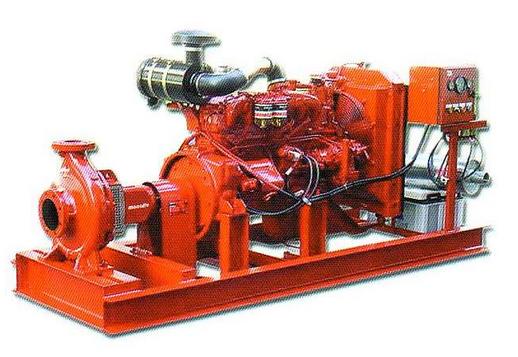
Pump Type Follows:

Sunday, July 2, 2023

Pool Drain Pump Without Electricity

If we have a fish pond, of course, sometimes we need to clean the water because of the large amount of sediment in the pond.

In this cleaning process, we only need to suck up only the bottom of the pool without having to throw away all the water, because to fill the pool completely requires a large amount of water.

If our pool is positioned higher than the disposal site, of course it's easier to just drain the bottom part by sucking it using a hose and the end of the hose is directed to the bottom of the pool.

The problem is that we often have to suck it up using our mouths and that's really disgusting because the pool water is dirty and sometimes smelly, especially since it used to suck up the bottom. So, in the following video, we make a tool so you don't have to suck it up using your mouth, we make drain pump without electricity:


Monday, June 26, 2023

Fixing a Stuck Aquarium Pump

The aquarium pump sometimes gets stuck and stops and doesn't want to run when the power goes out, this can be caused because the pump is too dirty so the propeller doesn't want to spin.

Another problem will arise if when you disassemble the propeller and magnet parts, there are parts that are missing or fall into the water so that your pump cannot run perfectly anymore. Usually it is the part connected to the magnetic shaft that falls out when the cover is opened.

Here is a video where we can make our own parts to deal with an aquarium pump that tends to jam.


Monday, June 12, 2023

Water Pump Without Energy

 A water pump without electricity is really a hoax A lot of content on YouTube shows that they can make a simple tool that can pump water without electricity.

 Actually pumping water does not have to use electrical energy but can use solar energy or the energy of moving water. For example, the Hydram Pump does not require electrical energy but uses the energy of moving water which is converted into pressure energy. So that it can pump water to a higher level, and this is not a hoax.

As in the video below, I made a hydram pump on a small scale, namely a 1/2 inch pipe, of course it can't push too high, but the point is it can pump to a higher level.


 Unlike the hoax content about a water pump without electricity, the video shows that it can pump water from a deeper river to a higher road, obviously this is impossible. Therefore I also make videos about things that prove that the content is not true, like in the video below:


Tuesday, September 19, 2017

CONTROL VALVES

Fig. 1 Control Valve

What is Control Valve?


Control valve usually use in industrial pipe line. Using this control valve people or operator can control to open or closed this valve from control room. Sometime the location of control valve itself is far from the control room. Other part are similar with normal valve but on the stem to open valve is connected to control device.

A control valve consists of a valve, an actuator, and possibly one or more valve-control devices. The valves discussed in this section are applicable to throttling control (i.e., where flow through the valve is regulated to any desired amount between maximum and minimum limits). Other valves such as check, isolation, and relief valves are addressed in the next subsection. As defined, control valves are automatic control devices that modify the fluid flow rate as specified by the controller.

Valves are categorized according to their design style. These styles can be grouped into type of stem motion—linear or rotary. The valve stem is the rod, shaft, or spindle that connects the actuator with the closure member (i.e., a movable part of the valve that is positioned in the flow path to modify the rate of flow). Motion of either type is known as travel. The major categories are described briefly below.

Globe Control Valve


Fig 2. Globe Control Valve


The most common linear stem-motion control valve is the globe valve. The name comes from the globular shaped cavities around the port. In general, a port is any fluid passageway, but often the reference is to the passage that is blocked off by the closure member when the valve is closed. In globe valves, the closure member is called a plug. The plug in the valve shown in Fig 1 is guided by a large-diameter port and moves within the port to provide the flow control orifice of the valve. A very popular alternate construction is a cage-guided plug as illustrated in Fig.2. In many such designs, openings in the cage provide the flow control orifices. The valve seat is the zone of contact between the moving closure member and the stationary valve body, which shuts off the flow when the valve is closed. Often the seat in the body is on a replaceable part known as a seat ring. This stationary seat can also be designed as an integral part of the cage. Plugs may also be port-guided by wings or a skirt that fits snugly into the seat-ring bore.

One distinct advantage of cage guiding is the use of balanced plugs in single-port designs. The unbalanced plug depicted in Fig. 1 is subjected to a static pressure force equal to the port area times the valve pressure differential (plus the stem area times the downstream pressure) when the valve is closed. In the balanced design (Fig. 2), note that both the top and bottom of the plug are subjected to the same downstream pressure when the valve is closed. Leakage via the plug-to-cage clearance is prevented by a plug seal. Both plug types are subjected to hydrostatic force due to internal pressure acting on the stem area and to dynamic flow forces when the valve is flowing.

The plug, cage, seat ring, and associated seals are known as the trim. A key feature of globe valves is that they allow maintenance of the trim via a removable bonnet without removing the valve body from the line. Bonnets are typically bolted on but may be threaded in smaller sizes.

Friday, November 14, 2014

Pump Products

Here are some of many kind of Pump Products, other product you can find on the pums suppliers:
  • Hydraulic Pumps
  • Centrifugal Pumps
  • Submergesible Pumps
  • Jet Pumps
  • Water Pumps
  • Oil Pumps
  • Chemical Pumps
  • Magnetic Pumps
  • Screw Pumps
  • Injector Pumps
  • Turbine Pumps
  • Propeller Pumps
  • Sludge Pumps
  • Lube Pumps

Tuesday, October 29, 2013

Pump For Sludge

Pump for sludge need special properties because should have ability to suck high consistency pump. Pump should have ability to suck using special treated housing segments to provide excellent lifecycle performance in abrasive material application.


For many abrasive fluids (including highly viscous fluids require:
  • Pulse free or low shear pumping
  • Self-priming or a strong vacuum
  • Measured flow or constant pressure at different flow rates
  • Ability to pump entrained air or gases
The example of applications:
Waste water sludge
  • Bio fuel
  • Slurries
  • Drilling mud

Friday, April 26, 2013

How to Choose Fish Water Pump

In design fish pond should be integrated with the use of water fish pump. On choosing water fish pump will affect to the design of fish pond. Beside in connection to the capacity of pump and fish pond size, other consideration of course about the cost.

The important point on choosing water fish pump is the ability to control water on the circulation system. Other consideration is effect of pump power to the fish live. Other factor to the power of fish pump is angle of pipe, number of elbow, can change the power of fish pump.

Other important factor on choosing fish pump is the understanding of pump characteristic that write on the pump. Better we understand the meaning on the pump like maximum head (maximum head of water can be pumped), maximum volume (max L/H), electrical power (watt) and other specification.

Related Articles:

Friday, March 29, 2013

Water Pump For Fish

You can change your simple and dull fish pond with Multi-Functional Aquarium Pump to add more features to the pond without the hassle of re-building. Designed to create circulation of the water, the versatile can produce spectacular features in your pond such as waterfall or streams. Made of stainless steel and plastic, the pump is anti-corrosive and acid resisting.


It is also fully submersible which will sit at the bottom of your pond quietly with low energy consumption while delivering the outstanding performance. For the use of both fresh and salt water, Multi-Functional Aquarium Pump has an added feature of automatically switching off when the machine is overheat.

World-renowned aquarium pump boasts exceptional quality and reliable performance. Epoxy filled, hermetically sealed, low energy consumption motors result in silent, efficient operation while surpassing the highest safety standards. Features removable integrated pre-filter for convenient installation. Run internally or externally in fresh or saltwater.

Tuesday, March 27, 2012

Domestic Pumps

Many kind of Domestic pump you can use in your house, it's depend on the purpose of your pump will use. The kind of domestic pump you may choose as on the below lists:

  • Agriculture Pump, the feature of agriculture pumps as the pump bearings are water lubricated, wet type submersible motor, water cooled and water lubricated applications of agriculture and domestic pump.
  • Lubi Pump, this company sell many kind of domestic pump brands such as Cri, Suguna, Best, Texmo, Johnson, Kirloskar, Grundfos and AEC. The range offer encompasses self priming & non-self priming monoblock pumps, jet pumps.
  • Horisontal Pump, horizontal pumps have spect: head about 5 to 40 meters, capacity range 3420 - 600 liter per hour, Power Rating: 0.37 kW and 0.75 kW (0.50 HP and 1.0 HP). Material of construction Standar Supply Impeller: Stainless Steel Casing, Cast Iron Motor Body, Cast Iron Shaft, carbon steel.
  • Centrifugal Domestic Pump: Silent features of centrifugal pump, efficient performance in low voltage, impeller well balance and rust proof coating for longer life, norry impeller used for better performance, efficiency and duty point consistency mainteined with a leading brands.
  • Pressure Booster Domestic Pump, an equipment to achieve the right water resource, maintaining the plant constantly under pressure and restricting the electrical pump's starting time and numbers. The automatic pressure systems are designed to automatically start and stop the pump on opening and closing of taps Pressure Booster Domestic Pump.
  • Domestic Submersible Pump, High grade domestic submersible pump, are widely appreciate for their comprehensive functionality. This domestic submersible pump are precise designed by higly experience team of engineer using advance technology system. 

Sunday, February 5, 2012

Pump For Fish

Submersible pond pumpsand external ponds pumps are used in all types of ponds including fish ponds, koi ponds, other small ponds and even larger commercial ponds. Small pumps usually is easier to install and operate, while external pond pumps are more powerful and mean for larger ponds are ponds where multiple piece of equipment are operated such as pond filters and waterfalls.

Your choose of pump size is depended on the pond size that need to remove all the volume of water, all water on the pond at least once per hour will finished. For example your pond contain 1000 gallons you need a pump that will move at minimum 1000 gallons water per hour.

Many type and trade mark of pump as follows:

Alpine Pond Pump:


Alpine pumps are ideal for general pond, waterfall or filter system use.

Cal Pond Pump


Cal pumps legendary quality goes into every pond and water gardening product they make.

External Pond Pump:


External pond pumps are designed for moving volumes of water and are placed outside of the pond. These pumps range from 2200 GPH up to 9600 GPH.

Submersible Pond Pump:


Submersible pond pumps are most commonly for smaller ponds and water gardens. They are generally easy to install and use and are placed in the pond.

Wednesday, January 4, 2012

Heat Exchangers For Solids

This section describes equipment for heat transfer to or from solids by the indirect mode. Such equipment is so constructed that the solids load (burden) is separated from the heat-carrier medium by a wall; the two phases are never in direct contact. Heat transfer is by conduction based on diffusion laws.

Some of the devices covered here handle the solids burden in a static or laminar-flowing bed. Other devices can be considered as continuously agitated kettles in their heat-transfer aspect. For the latter, unit-area performance rates are higher.

Computational and graphical methods for predicting performance are given for both major heat-transfer aspects in Sec. 10. In solids heat processing with indirect equipment, the engineer should remember that the heat-transfer capability of the wall is many times that of the solids burden. Hence the solids properties and bed geometry govern the rate of heat transfer. This is more fully explained earlier in this section. Only limited resultant (not predictive) and “experience” data are given here.

EQUIPMENT FOR SOLIDIFICATION


A frequent operation in the chemical field is the removal of heat from a material in a molten state to effect its conversion to the solid state. When the operation is carried on batchwise, it is termed casting, but when done continuously, it is termed flaking. Because of rapid heat transfer and temperature variations, jacketed types are limited to an initial melt temperature of 232°C (450°F). Higher temperatures [to 316°C (600°F)] require extreme care in jacket design and cooling liquid flow pattern. Best performance and greatest capacity are obtained by (1) holding precooling to the minimum and (2) optimizing the cake thickness. The latter cannot always be done from the heat-transfer standpoint, as size specifications for the end product may dictate thickness.

Table Type
This is a simple flat metal sheet with slightly upturned edges and jacketed on the underside for coolant flow. For many years this was the mainstay of food processors. Table types are still widely used when production is in small batches, when considerable batch-to-batch variation occurs, for pilot investigation, and when the cost of continuous devices is unjustifiable. Slab thicknesses are usually in the range of 13 to 25 mm (a to 1 in). These units are homemade, with no standards available. Initial cost is low, but operating labor is high.

Agitated-Pan Type
A natural evolution from the table type is a circular flat surface with jacketing on the underside for coolant flow and the added feature of a stirring means to sweep over the heat transfer surface. This device is the agitated-pan type (Fig. 11-51). It is a batch-operation device. Because of its age and versatility it still serves a variety of heat-transfer operations for the chemical-process industries. While the most prevalent designation is agitated-pan dryer (in this mode, the burden is heated rather than cooled), considerable use is made of it for solidification applications. In this field, it is particularly suitable for processing burdens that change phase (1) slowly, by “thickening,” (2) over a wide temperature range, (3) to an amorphous solid form, or (4) to a soft semi gummy form (versus the usual hard crystalline structure).


The stirring produces the end product in the desired divided-solids form. Hence, it is frequently termed a “granulator” or a “crystallizer.” A variety of factory-made sizes in various materials of construction are available. Initial cost is modest, while operating cost is rather high (as is true of all batch devices), but the ability to process “gummy” burdens and/or simultaneously effect two unit operations often yields an economical application.


Vibratory Type
This construction (Fig. 11-52) takes advantage of the burden’s special needs and the characteristic of vibratory actuation. A flammable burden requires the use of an inert atmosphere over it and a suitable nonhazardous fluid in the jacket. The vibratory action permits construction of rigid self-cleaning chambers with simple flexible connections. When solidification has been completed and vibrators started, the intense vibratory motion of the whole deck structure (as a rigid unit) breaks free the friable cake [up to 76 mm (3 in) thick], shatters it into lumps, and conveys it up over the dam to discharge. Heat-transfer performance is good, with overall coefficient U of about 68 W/(m2 ×°C) [12 Btu/(h×ft2 ×°F)] and values of heat flux q in the order of 11,670 W/m2 [3700 Btu/(h×ft2)]. Application of timing cycle controls and a surge hopper for the discharge solids facilitates automatic operation of the caster and continuous operation of subsequent equipment.

Belt Types
The patented metal-belt type (Fig. 11-53a), termed the “water-bed” conveyor, features a thin wall, a well-agitated fluid side for a thin water film (there are no rigid welded jackets to fail), a stainless-steel or Swedish-iron conveyor belt “floated” on the water with the aid of guides, no removal knife, and cleanability. It is mostly used for cake thicknesses of 3.2 to 15.9 mm (f to v in) at speeds up to 15 m/min (50 ft/min), with 45.7-m (150-ft) pulley centers common.

For 25- to 32-mm (1- to 1d-in) cake, another belt on top to give two sided cooling is frequently used. Applications are in food operations for cooling to harden candies, cheeses, gelatins, margarines, gums, etc.; and in chemical operations for solidification of sulfur, greases, resins, soaps, waxes, chloride salts, and some insecticides. Heat transfer is good, with sulfur solidification showing values of q = 5800 W/m2
[1850 Btu/(h×ft2)] and U = 96 W/(m2 ×°C) [17 Btu/(h×ft2 ×°F)] for a 7.9-mm (b-in) cake.


The submerged metal belt (Fig. 11-53b) is a special version of the metal belt to meet the peculiar handling properties of pitch in its solidification process. Although adhesive to a dry metal wall, pitch will not stick to the submerged wetted belt or rubber edge strips. Submergence helps to offset the very poor thermal conductivity through two-sided heat transfer. A fairly recent application of the water-cooled metal belt to solidification
duty is shown in Fig. 11-54. The operation is termed pastillizing from the form of the solidified end product, termed “pastilles.” The novel feature is a one-step operation from the molten liquid to a fairly uniformly sized and shaped product without intermediate operations on the solid phase.

Sunday, December 11, 2011

Chemicals Pump

Chemical pump need special specification because the chemical can corrosive and easily make the pump broken and leakage. Some part of this pump need special material like stainless steel or tungsten carbide.

The example of chemical pump model such as chemical Wilfley’s Model A7 is a heavy-duty chemical processing pump. It is designed for the most difficult applications, pumping highly corrosive liquids and, in certain instances, liquids containing solids.

Liquid can be pumped as follows:
  • Ammonium Nitrate
  • Caustic
  • Corn processing – starch
  • Hydrochloric acid
  • Kaolin clay
  • Lead/zinc
  • Molten sulfur
  • Milk of lime
  • Nitric acid
  • Phosphoric acid
  • Salt
  • Scrubber/contaminated liquids
  • Spent acids
  • Sugar
  • Sulfuric acid
  • Titanium dioxide
  • Urea melt
  • Waste fuels
Process that use that chemical can use this pump, like as below:
  • Batching applications
  • Crystallizer recirculation/transfer
  • Evaporator recirculation/product transfer
  • Filter feed
  • Thickener under/over flow
  • Loading/unloading applications

Saturday, November 19, 2011

Parallel Centrifugal Pump

Parallel combine of two centrifugal pump in parallel will result a higher volumetric of pumping capacity. As shown on the drawing below, inlet and outlet of each pump are at identical points in the system. Each pump will produce same pump head, the head combination will same as single pump head, the total flow rate in the system will same with the sum of individual flow rates for each pump.


Actual condition of centrifugal pump that are combined in parallel will shown slight different with the theory. On the system characteristic curve is considered with the curve for pump in parallel, the operating point at the intersection of two curves represents a higher volumetric flow rate than for single pump and also will have greater system head loss. A greater system head loss occurs with the increase of fluid velocity resulting from the increased volumetric flow rate. Due to the greater system head loss, the volumetric flow rate is actually less than the flow rate achieved by using a separate two single pump.

Sunday, October 9, 2011

Horse Power of Hydraulic Pump

Hydraulic pumps are one of the important components that hydraulic machinery have. The various hydraulic fluids such as oil and water are supplied to the hydraulic machinery with the help of a hydraulic pump. Basically, a hydraulic pump is the main tool needed in order for hydraulic machinery to work.


The formula to calculate the horse power of hydraulic pump can use the formula as follows:
Horse power can be expressed as Php ,

Php = q x p/1714

Php = horsepower (HP)
q = required pump capacity (gpm)
p = required pressure (psi)
  • 1 gpm (US) = 6.30888 x 10⁻⁵ m3/h = 0.06309 dm3 (liter)/s = 2.228x10⁻³ ft3/s = 0.1337 ft3/min = 0.8327 gpm (UK)
  • 1 psi (lb/in2) = 144 psf (lbf/ft2) = 6,894.8 Pa (N/m2) = 6.895x10⁻³ N/mm2 = 6.895x10⁻² bar
  • 1 hp = 745.7 W
As an example how to calculate the horsepower needed as follow:

Power required by a a pump with 20 gpm capacity and 1500 psi pressure can be calculated as
PHP = 20 (gpm) 1500 (psi) / 1714
= 17.5 HP

Sunday, September 18, 2011

Small Pump Type

Small pump type can use in the garden or use in fishpond. In the garden can connected to sprinkle that spray water and turn automatically around the garden plant. Small pump in fishpond to make a water circulate along time and can through the water filter first before water flow back to the fishpond. To select the right type of this pump should identify the needed of this pump first.

There are several major mistake on selecting pump, and this mistake make the price of pump become expensive because they should change the pump with the other type. The main point on selecting small pump you should know the design needed of your flow of pump. After you know what is your needed like the flow of your pump you then notice to the pump specification before you choose to buy.

Many of the shelf pump have misleading performance labels. Often pump package will be labelled with something similar to 20 GPM, 55 PSI or it may say 20 GPM, 127 feet of lift. What mean by 20 GPM or 55 PSI? This is critical to know it. There is a huge difference in performance between a pump that produces 20 GPM at 55 PSI, and a pump that produces 20 GPM or 55 PSI. You should ask this label exactly to the pump vendor and ask the guarantee of this labeling.

For buying pump for your garden, you may search pump with name of "high pressure pump," because very few pumps marketed under the name like "irrigation pump" that are suitable for a typical sprinkler irrigation system with multiple sprinkler.To choose this pump don't confused with displacement pumps that are used for moving very thick liquids, creating very precise flow volumes or creating very high pressures. Displacement pump force the water to move by displacement, this means pumps such as piston pumps, diaphragm pumps, roller tubes and rotary pumps.

Wednesday, August 10, 2011

Sludge and Dewatering Pump

Sludge Pumps
Sludge pumps are designed for professional use in tough applications like mines, construction sites, funnel sites and other demanding industries.

Sludge Pump
Sludge pumps designed for:

  • Pumping water with solids handling capacity up to the size of 3.2” (80 mm)
  • Pumping water which contains abrasive particles
  • Pumping different types of mud and sludge
  • Pumping light slurry

The pumps are designed for continuous, unattended operation. The pump should be proven their reliability and dependable performance in demanding areas like building and construction, mining, tunneling, quarries, general industries, car washes and rental applications.

Small dewatering and sludge pumps.
These small dewatering and sludge pumps are small, easy to carry, yet still intended for professional use. They are frequently used in construction and rental applications, flood relief in basements and other applications that require lightweight pumps. The sludge pump solid has set a new standard for lightweight sludge pumps and is appreciated all over the world. It can pump solids in suspension up to the size of 1.5” (38 mm). If the area where the pump will be applied have corrosive environment you can use stainless type materials. Usually this type of pump use in mines, construction sites, landfill sites and other applications that deal with corrosive water. One application is in mines where the water becomes caustic and destroy conventional pumps in a matter of days. The pump may also be used in applications where saltwater is pumped, like ship yards, fish farms, construction works in harbors and offshore projects.

Dewatering Pump

Saturday, July 23, 2011

Sulzer Pump and Armstrong Pump

Pump Type:
The pump manufactures that many used in industry like Sulzer pump and Armstrong pump.

Glimpse story about Sulzer Pump:
Sulzer Pumps is one of the world's leading pump manufacturers, recognized for excellent product quality, performance reliability and technical innovation. We provide a full line of pumps, equipment and related technologies to the Oil and Gas, Hydrocarbon Processing, Power Generation and Pulp and Paper industries.
With our global network of 13 product orientated factories and service centers and sales offices in more than 150 countries, we are a truly global company, close to customers acting locally through our regional teams with local market understanding and expertise.

Glimpse Story about Armstrong Pump:
At Armstrong, we take pride in a family tradition of fluid flow innovation, superb workmanship, and acknowledged product reliability.

Since our founding in 1934 by Samuel Allan Armstrong, our company has pioneered an uncompromising range of products for customers in residential, commercial and industrial markets. From the very beginning, the Armstrong name has been a benchmark for quality in design, engineering and manufacturing.

In 1952, our company, under the direction of James A.C. Armstrong, began to institute bold initiatives across the the entire spectrum of our corporate activities that set our course for the next30 years. In the decades that followed, we developed new technologies, established international manufacturing operations and expanded into more diverse markets. Today, as we serve customers throughout the world, our original commitment to production of the highest quality is unchanged. We will not compromise the expectation of us, and we will never allow an inferior product to carry the Armstrong name. For Armstrong, identifying customer needs, offering superior technology, and building great customer experiences, are all part of a long-standing family tradition.

Armstrong Pump

Tuesday, June 7, 2011

Fundamental of Hydraulic Pump

In hydraulic systems forces and motion are transferred by liquids. By means of the transferring liquid it is possible to convert the forces and to control the movements precisely.
Example of application
Machine tools: Table movement in grinding machine; copy turning; transporting 2nd clamping of workpieces on transfer line; feed motion of machining units.
Vehicles: Brakes, automatic gears, tilting of loading surface, steering gear magnifier.
Crane, excavator: lifting and lowering motion of cantilever, gripper and boom.
Presses: Movement of plunger of press, generation of large pressures.
Mining plant: Hydraulic tunnel supports.
Aeroplanes: Movement of landing gear and empennage (tail group)

Advantages: convertion of large forces (pressures).
Continuous regulation of speed (feeds), precise control and actuating accuracy, bridging of long distances between drive and work units, mobility through flexible hose connection, starting from rest position under load, smooth running.

Basic definitions Hydrostastics
Hydro = water = liquid (fluid)
Static = rest.
Hydrostatics = static of fluid
When the liquid in a closed system of container and pipelines is set under pressure by the application of a force at any point, the resultant pressure energy may be received as force at any other point of the system, since work equals force multiplied by distance. Thus in hydraulic systems few law of hydrodynamics also occur.

Hydrodynamics
Hydrodynamics = dynamic of fluid.
In an open system of a tank and pipelines/penstock the liquid attains a very high flow-speed due to large gradient (height difference). At the end of the pipeline the energy of the following fluid can be converted into mechanical work, rotary motion, for example of a hydraulic turbine.


Whether a system is hydrostatic or hydrodynamic depends on the type of energy transfer, hydrostatic = pressure energy, hydrodynamic =motion energy. Although few laws of hydrostatic also apply, hydrolic systems are basically hydrostatic in nature because the energy transfer is carried out fundamentally by means f pressure energy.

Propagation of Pressure
In a close system, if the liquid at a point is set under pressure the whole of the liquid comes under the same pressure at all other points. The force developed acts normal (in perpendicular direction) to the inner walls of the container. Pressure vessels have, for safety reasons. Outward or inward curved bottoms; spray cans, steam boiler, champagne bottle, oxygen cylinder, etc.

Monday, May 23, 2011

Hydrant Pump

Many type hydrant pump can install on your plant depend of how big water should flow if they are needed. From small type to big type of hydrant also available. Hydrant pump can operate inline or submersed operation. To choose and operate hydrant pump find on the guideline bellow:


  1. Verify the pump size fits the application without dramatically restricting the flow, consult your local dealer or manufacturer's guidelines for the proper size and model of pump.
  2. Do not reduce the input diameter of the pump.
  3. You must incorporate a pre-filter when operation for a water circulation, waterfalls, ponds and fountains
  4. Replace the impeller if there are any signs of damage or excess wear
  5. Failure to maintain a pump will cause permanent damage to the impeller and/or pump. Routine maintenance is of the utmost importance to keep your pump working well.

Thursday, March 24, 2011

Choose the Right Valve

There are many kind of valve in the market, ball valve, globe valve, gate valve, diaphragm valve or check valve. All those valve have special uses or better for certain uses and sometime can't use for other purposes like check valves, because check valve just can be used for one direction. Check valves usually use in the bottom of suction pipe on the pump to prevent water or liquid flow back or to prevent the liquid empty on the bottom so the pump can cavitation, however, check valve also use in the front of the water meter that supplied from water pump industry to prevent the meter goes back.

Ball Valves use in the first opening of the liquid (water or air) and this valve should be full opened or full closed. To regulate the flow need other kind of valves, we can use globe valve, gate valve or diaphragm valve. Use Gate valve if the flow of the liquid need not to accurate enough, but we should use globe valve if the flow should be accurate. Diaphragm valve use when the liquid contain many suspended solid, like water with too many mud flows or other kinds of chemical that contain of mud. Especially on the chemical control, diaphragm valve should use suitable material that pretend on the chemicals.